Reverse osmosis (RO) systems have become increasingly popular in recent years as a reliable method for purifying water. As a supplier of reverse osmosis systems, I often get asked whether these systems can effectively remove bacteria from water. In this blog post, I’ll delve into the science behind reverse osmosis and explore its ability to eliminate bacteria, providing you with a comprehensive understanding of how these systems work and their limitations. Reverse Osmosis System

Understanding Reverse Osmosis
Reverse osmosis is a water purification process that uses a semi – permeable membrane to remove a wide range of contaminants from water. The process works by applying pressure to the water on one side of the membrane, forcing it through the tiny pores in the membrane while leaving behind larger particles, molecules, and ions.
The semi – permeable membrane used in RO systems has pores that are extremely small, typically around 0.0001 microns in size. This is much smaller than the size of most bacteria, which generally range from 0.2 to 2 microns in diameter. As a result, in theory, the membrane should be able to physically block bacteria from passing through.
How Reverse Osmosis Removes Bacteria
When water containing bacteria is passed through a reverse osmosis system, the pressure forces the water molecules through the membrane, while the bacteria, being too large to pass through the pores, are retained on the feed side of the membrane. This physical separation is the primary mechanism by which RO systems can remove bacteria.
In addition to the physical barrier, the reverse osmosis process also disrupts the osmotic balance of the bacteria. Bacteria rely on a stable osmotic environment to survive. When they are unable to pass through the membrane and are subjected to the pressure differential, their internal osmotic balance is disrupted, which can lead to their inactivation or death.
Effectiveness of Reverse Osmosis in Removing Bacteria
Numerous studies have shown that reverse osmosis systems are highly effective at removing bacteria from water. In fact, RO systems can achieve a bacteria removal rate of up to 99.99%. This high level of efficiency makes them a popular choice for both residential and commercial applications where water safety is a concern.
However, it’s important to note that the effectiveness of an RO system in removing bacteria can be influenced by several factors. The quality and integrity of the membrane play a crucial role. If the membrane is damaged or has defects, bacteria may be able to pass through. Additionally, the operating conditions of the system, such as pressure and flow rate, can also affect its performance.
Limitations of Reverse Osmosis in Bacteria Removal
While reverse osmosis is generally very effective at removing bacteria, it does have some limitations. One of the main limitations is that RO systems are not 100% foolproof. There is always a small chance that a few bacteria may be able to bypass the membrane, especially if the system is not properly maintained.
Another limitation is that reverse osmosis systems do not provide continuous disinfection. Once the water has passed through the RO system, there is no ongoing protection against bacteria. If the water is stored in a container or distributed through a plumbing system, there is a risk of bacterial re – growth.
Complementary Disinfection Methods
To overcome the limitations of reverse osmosis in bacteria removal, it is often recommended to use complementary disinfection methods. For example, ultraviolet (UV) disinfection can be used in conjunction with an RO system. UV light can effectively inactivate bacteria by damaging their DNA, providing an additional layer of protection.
Chlorination is another common disinfection method. Chlorine can be added to the water either before or after the RO system to kill any remaining bacteria and prevent re – growth. However, it’s important to note that chlorine can react with organic matter in the water to form harmful by – products, so careful monitoring and control are required.
Maintenance and Monitoring
Proper maintenance and monitoring of a reverse osmosis system are essential to ensure its continued effectiveness in removing bacteria. Regular membrane replacement is crucial to maintain the integrity of the membrane and prevent bacteria from passing through. Additionally, the system should be regularly cleaned and sanitized to prevent the growth of biofilms, which can harbor bacteria.
Monitoring the water quality is also important. Regular testing for bacteria and other contaminants can help detect any issues early and allow for timely corrective action. This can include testing the feed water, the permeate (treated water), and the concentrate (rejected water) to ensure that the system is operating as expected.
Applications of Reverse Osmosis for Bacteria Removal
Reverse osmosis systems are widely used in various applications where bacteria removal is critical. In the residential sector, RO systems are commonly used to provide clean and safe drinking water. They can remove bacteria, as well as other contaminants such as heavy metals, pesticides, and fluoride, making the water more palatable and healthy.
In the commercial and industrial sectors, RO systems are used in a variety of applications, including food and beverage processing, pharmaceutical manufacturing, and power generation. In these industries, the presence of bacteria can have serious consequences, so reliable water purification is essential.
Conclusion
In conclusion, reverse osmosis systems are highly effective at removing bacteria from water. The physical separation provided by the semi – permeable membrane, combined with the disruption of the bacteria’s osmotic balance, allows for a high level of bacteria removal. However, it’s important to be aware of the limitations of RO systems and to use complementary disinfection methods to ensure the ongoing safety of the water.
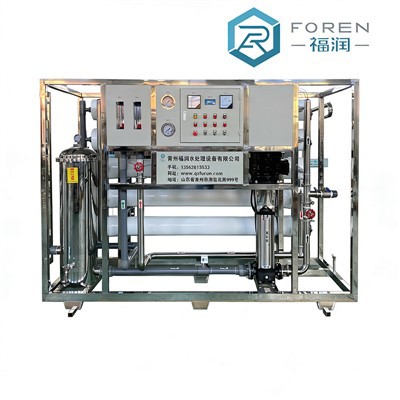
Proper maintenance and monitoring are also crucial to keep the system operating at its best. By understanding how reverse osmosis works and its capabilities and limitations, you can make an informed decision about whether an RO system is the right choice for your water purification needs.
Stainless Steel Products If you’re interested in learning more about our reverse osmosis systems or are considering purchasing one for your home or business, I encourage you to reach out to us. Our team of experts is ready to answer your questions and help you find the best solution for your specific requirements. Contact us today to start the conversation and take the first step towards cleaner, safer water.
References
- "Water Treatment Unit Processes: Physical and Chemical", by David W. Hendricks
- "Reverse Osmosis Technology: Principles, Design, and Applications", by J. A. Howell
- "Handbook of Water and Wastewater Treatment Plant Operations", by Jerry N. Johnson
Qingzhou Foren Water Treatment Equipment Co., Ltd.
As one of the most professional reverse osmosis system manufacturers and suppliers in China, we offer a wide range of products with superior quality. Please feel free to buy customized reverse osmosis system made in China here from our factory. Contact us for quotation.
Address: No.999 Haidai North Road, Economic development Zone, Qingzhou City, Shandong Province
E-mail: alice@forenwater.com
WebSite: https://www.forenwater.com/
