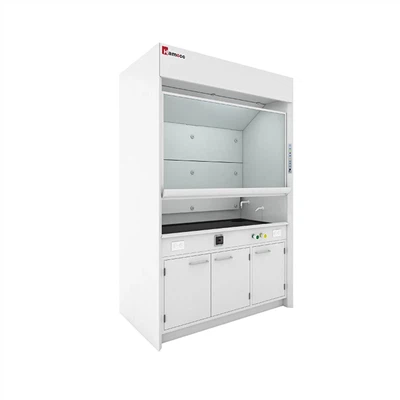
As a dedicated supplier of ductless fume hoods, I’ve witnessed firsthand the ever – evolving demands of laboratories and industrial settings for efficient ventilation solutions. One question that frequently emerges is, "What is the difference between ductless and ducted fume hoods?" In this blog, I’ll explore the key disparities based on my years of experience and knowledge. Ductless Fume Hoods
Working Principle
Let’s start with the fundamental difference, which lies in their working principles. Ducted fume hoods operate by using a ventilation system that connects to an exhaust duct. This duct is typically routed through the building’s ventilation infrastructure, leading to an external exhaust point on the roof or side of the building. When the fume hood is in use, air and contaminants from the workspace are sucked into the hood and then transported through the duct to be expelled outside.
On the other hand, ductless fume hoods are self – contained units. They work by drawing air into the hood where it passes through a series of filters. These filters are designed to trap and remove specific contaminants, such as chemicals, particulate matter, or fumes. Once the air has been filtered, it is recirculated back into the laboratory or workspace.
Installation
The installation process of these two types of fume hoods is significantly different. Ducted fume hoods require a complex installation procedure. First, the physical unit needs to be carefully positioned in the laboratory. But the real challenge comes with the ductwork installation. This involves coordinating with the building’s architecture and ventilation systems. Specialists need to ensure that the ducts are properly sized, sealed, and connected to the main exhaust. In cases where there is no existing ductwork, a new system may need to be installed, which can be a costly and time – consuming process. It may also require structural modifications to the building, such as cutting through walls or ceilings.
Ductless fume hoods, in contrast, are relatively easy to install. They are freestanding units that can be simply placed in the desired location within the laboratory. There is no need for extensive ductwork or major building modifications. All that is required is a power source to operate the fan and filtration system. This makes ductless fume hoods a great option for laboratories that are restricted by renovation budgets, space, or time constraints.
Cost
Cost is always an important consideration when choosing a fume hood. Ducted fume hoods generally have a higher upfront cost. As mentioned earlier, the installation of ductwork and the necessary coordination with building systems can add a significant amount to the overall price. Additionally, the ongoing operational costs of ducted fume hoods are relatively high. They require a large amount of energy to operate the exhaust fans that move air through the long duct systems. There may also be ongoing maintenance costs associated with the ductwork, such as cleaning and repairs to ensure proper airflow and prevent leaks.
Ductless fume hoods have a lower upfront cost. The simple installation process reduces labor and material expenses. Their operational costs are also more economical. Since they recirculate air within the laboratory, they consume less energy compared to ducted fume hoods. The main recurring cost for ductless fume hoods is the replacement of filters, but these costs are typically much lower than the long – term operating and maintenance costs of ducted fume hood systems.
Mobility and Flexibility
If you need to move or reconfigure your laboratory setup in the future, ductless fume hoods offer a distinct advantage. They can be easily relocated from one area of the laboratory to another. This portability allows for greater flexibility in laboratory layout changes as your research needs evolve. You can simply unplug the unit, move it to the new location, and plug it back in.
Ducted fume hoods, however, are much less mobile. Once they are installed, moving them requires extensive re – working of the ductwork. This can be not only expensive but also time – consuming, often disrupting laboratory operations for an extended period. It also limits the ability to make quick adjustments to the laboratory layout.
Environmental Impact
The environmental impact of these two types of fume hoods is also different. Ducted fume hoods expel large amounts of conditioned air from the laboratory outside. This means that the energy used to heat or cool the laboratory is wasted, as the conditioned air is constantly being replaced with unconditioned outside air. This can lead to increased energy consumption and higher greenhouse gas emissions, especially in large – scale laboratory facilities.
Ductless fume hoods, by recirculating air within the laboratory, reduce energy waste. They help maintain the internal temperature and humidity of the laboratory without the need to constantly condition new outside air. As a result, they have a lower environmental footprint, making them a more sustainable choice for environmentally – conscious organizations.
Contaminant Removal Efficiency
Both types of fume hoods are designed to remove contaminants, but their efficiency can vary depending on the type of contaminants. Ducted fume hoods are generally very effective at removing a wide range of contaminants, including large volumes of toxic fumes, gases, and particulate matter. The continuous flow of air through the duct system ensures that contaminants are quickly removed from the laboratory environment.
Ductless fume hoods are highly effective at removing specific contaminants for which their filters are designed. For example, activated carbon filters can effectively remove organic chemicals, while HEPA filters are excellent at capturing particulate matter. However, their performance is limited by the capacity of the filters. Once the filters are saturated, the efficiency of contaminant removal decreases, and the filters need to be replaced.
Safety Considerations
Safety is of utmost importance in any laboratory setting. Ducted fume hoods provide a high level of safety by completely removing contaminants from the laboratory. This is particularly important when working with highly toxic or volatile substances. However, there are potential safety risks associated with the ductwork. Leaks in the duct can allow contaminants to enter other parts of the building, posing a risk to the health of occupants.
Ductless fume hoods also offer a high level of safety when properly maintained. The filters act as a barrier, preventing contaminants from being released back into the laboratory environment. However, it is crucial to regularly monitor the filter status and replace them in a timely manner to ensure continued protection. In addition, there is a risk of exposure if the wrong type of filter is used for the contaminants being generated.
In conclusion, both ductless and ducted fume hoods have their own advantages and disadvantages. The choice between the two depends on various factors, such as budget, space, the type of contaminants being handled, and the long – term flexibility requirements of your laboratory.
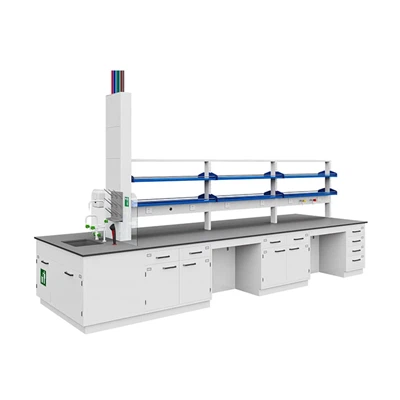
As a supplier of ductless fume hoods, I believe that our products offer a practical and cost – effective solution for many laboratory applications. Our ductless fume hoods are engineered to provide efficient contaminant removal, ease of use, and energy efficiency. We offer a range of models and filter options to meet the specific needs of different laboratories.
Shower and Eyewash Station If you’re interested in learning more about our ductless fume hoods or would like to discuss your specific requirements with a ventilation expert, we encourage you to reach out. Let’s have a conversation to determine the best solution for your laboratory.
References
- "Handbook of Laboratory Safety and Design." Various authors.
- "Ventilation in Laboratories: Best Practices." Laboratory Ventilation Institute.
- "Comparative Study of Ductless and Ducted Fume Hoods in Chemical Laboratories." Research Journal on Laboratory Technologies.
HAMECC(Shanghai) Lab Solutions Co., Ltd.
We’re well-known as one of the leading ductless fume hoods manufacturers and suppliers in China, featured by quality products and good price. Please rest assured to buy customized ductless fume hoods made in China here from our factory.
Address: Building 1, No. 2222, Huancheng Road, Jiading District, Shanghai
E-mail: info@hamecc.com
WebSite: https://www.hamecc.com/
