Hey there, if you’re deep in the electronics assembly game, you know carrier tape isn’t just some random plastic strip you stuff components into. It’s the unsung hero that keeps resistors, LEDs, and tiny semis from getting crushed, static-laden, or misplaced during pick-and-place. But here’s the thing most folks gloss over: electrical conductivity isn’t a one-size-fits-all thing for carrier tape materials. When I first started in this game (ah, 2012, back when I was just learning the ropes from my old boss), I messed up a big order once—sent standard polycarbonate tape for static-sensitive RF modules, and 30% of the parts ended up damaged from ESD. Oops. That’s when I really dug into conductivity properties, and now, after 11 years supplying carrier tape materials, I’d never skip testing that spec for every client. Carrier Tape Materials
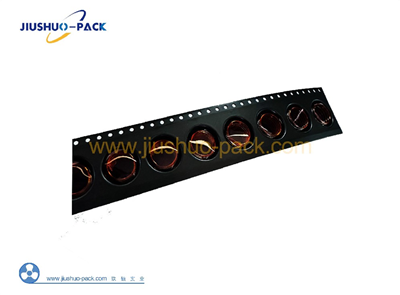
Let’s break this down like we’re chatting over a coffee (extra foam, obviously, ‘cause supply chain stress is real). First off, what even is carrier tape conductivity? It’s all about how well the material moves (or doesn’t move) electrical charge. For electronics, you want two main flavors here: antistatic and conductive. Don’t mix ‘em up—antistatic doesn’t shut down charge entirely, it just bleeds it slowly so it doesn’t zap a microchip. Conductive carrier tape? That’s for when you need to ground the whole tape, like in high-voltage assembly lines where stray charge can build up fast.
Most carrier tape starts as base plastics: polycarbonate (PC), polyvinyl chloride (PVC), polyethylene terephthalate (PET), even biodegradable stuff now for green manufacturing. All of these are insulators out of the box—they’re great at not moving charge, which is why static builds up on ‘em when they rub against sprockets or components. To make them useful, we add additives: carbon black, conductive polymers, metal-coated particles (thin aluminum or copper flakes), even anti-static monomers. That’s where the magic happens, and that’s where conductivity properties get specific.
Let’s talk numbers, but keep it casual—no lab jargon that makes your eyes glaze over. Electrical conductivity is measured in siemens per meter (S/m). Insulators clock in below 10^-12 S/m, that’s basically zero conductivity. Antistatic carrier tape? We’re looking at 10^-6 to 10^-1 S/m. That’s just enough to let static seep away into the ground (or the pick-and-place machine’s frame) without messing with the tiny parts’ own electrical signals. Pure conductive tape? That’s 1 S/m and up, right into the range where it can safely carry a small current or act as a continuous ground path.
Wait, why does this matter so much for you, the person ordering carrier tape? Let’s use that 2012 mistake again. The RF modules I messed up were sensitive to electrostatic discharge (ESD) above 100 volts. Standard PC tape was an insulator, so when the pick-and-place machine ran, static built up on the tape surface to 800 volts—enough to fry the module’s tiny sensor, even if you couldn’t feel it. I switched the order to carbon-black-loaded antistatic tape (10^-4 S/m), and that batch had zero damage. Case closed. Another example: if you’re working with high-power components, like automotive battery modules, you need conductive tape (10 S/m+) to ground the entire carrier tape so stray charge doesn’t arc between parts. Skip that, and you’ve got a fire hazard—no joke, auto manufacturing teams I work with test conductivity before every run.
But here’s a pro tip I learned the hard way: conductivity in carrier tape isn’t just a one-time number from the factory lab. It changes with environmental stuff, too. Humidity, for one—antistatic tape that uses moisture-absorbing additives (like some polycarbonate blends) will improve in low humidity, ‘cause the moisture on the surface lets charge bleed easier. Wait, no—wait, if humidity’s too high? Some older antistatic additives get washed out, and conductivity drops. Conductive tape, the carbon-blend kind? It’s way more stable in humidity, ‘cause the carbon network is inside the plastic, not on the surface. Temperature too—if you’re running a reflow oven with carrier tape (some folks use tape for temporary masking), high temps can break down conductive additives, making conductivity plummet. That’s why we test our materials at -40°C to 125°C for automotive clients, to make sure they don’t fail mid-assembly.
Also, let’s not forget the difference between surface conductivity and volume conductivity. Surface is how charge moves along the tape’s top or bottom surface—super important for preventing ESD, ‘cause that’s where the static builds up between components. Volume is how charge moves through the entire thickness of the tape—key for conductive tape that needs to ground the whole spool, not just the top layer. I’ve seen clients order conductive tape that only had good surface conductivity, and when they tried to ground the spool, it didn’t work ‘cause the volume conductivity was garbage. Now we flag that for every client—ask ‘em if they need surface-only or full-volume conductivity, ‘cause that changes the entire material recipe.
What about the new wave of green carrier tape, the biodegradable ones made from corn starch or PLA? Their conductivity properties are a bit trickier. PLA is an insulator, so we have to use bio-compatible conductive additives—no heavy metals. Our current blend uses carbon nanotubes that are food-safe (we test that, obviously), and it hits 10^-3 S/m, which is perfect for ESD-sensitive consumer electronics. The catch? Biodegradable tape’s conductivity degrades faster over time than plastic ones, but for most projects, that’s a non-issue—they only need the tape to work during assembly, not sit around for 5 years. We’ve had a big green tech startup come to us last quarter, and they loved that our bio carrier tape had the right conductivity without the plastic waste.
Now, let’s talk about what not to do. Don’t just pick the cheapest carrier tape with a conductivity number on the spec sheet. A lot of cut-rate suppliers will cut corners: add just enough carbon black to hit 10^-5 S/m, but not enough to make it consistent, so half the spool is good and half is garbage. That’s why we do 100% conductivity testing on every batch before it leaves our warehouse—small batch, sure, but it’s worth it to keep your assembly lines running, no surprises. I’ve had a client a year ago switch from a cheap supplier to us because their line was down for 3 days when bad conductivity let 20,000 microchips get damaged. I won’t name names, but let’s just say that supplier’s “discount” ended up costing them way more in downtime than switching to quality materials.
So, how do you know which conductivity you need for your parts? Let’s make a quick cheat sheet, ‘cause I know you’re busy:
- If your parts are ESD-sensitive (semis, sensors, LEDs): Go for antistatic carrier tape (10^-6 to 10^-1 S/m). Avoid regular plastic, no matter what the sales guy says.
- If you’re working with high-power parts, battery components, or need a ground path for the entire spool: Get conductive carrier tape (1 S/m+). Ask for volume conductivity, not just surface.
- If you’re using biodegradable materials: Look for bio-compatible conductive additives, and confirm the conductivity is stable for your assembly’s environmental conditions.
At the end of the day, carrier tape conductivity isn’t a “nice to have”—it’s a core spec that keeps your parts intact, your lines running, and your costs down (no reworks, no damaged inventory). I’ve been in this industry long enough to know that skipping the conductivity check is a $10k mistake waiting to happen.
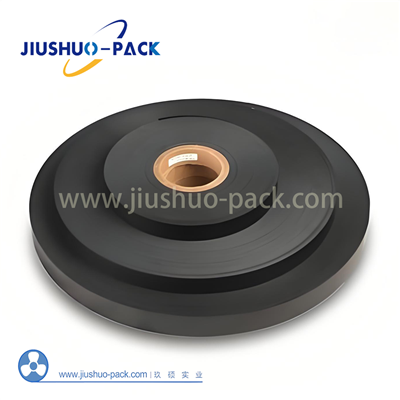
If you’re gearing up for a new project, having issues with ESD damage, or just want to make sure your current carrier tape is up to par, hit me up. We can test your parts’ sensitivity, walk through material options, and make sure you don’t repeat that 2012 mistake I made. No fluff, no sales pitch, just straight talk on carrier tape materials that work.
Plastic Reel References:
- Handbook of Plastics for Electrical and Electronic Applications, Carl Hanser Verlag, 2019.
- ESD Association Standard S11.11-2019, Electrical Characteristics of ESD Protective Packaging Materials.
- Conductive Polymers and Carbon-Based Additives for Polymer Composites, Woodhead Publishing, 2021.
- Environmental Effects on Carrier Tape Material Properties, International Electronics Manufacturing Initiative (iNEMI) Technical Report, 2022.
Dongguan Jiushuo Industrial Co., Ltd.
As one of the most professional carrier tape materials manufacturers and suppliers in China, we also support customized service. Please feel free to buy high quality carrier tape materials made in China here from our factory. Contact us for more details.
Address: 11th Floor, Building 2, Chuangfu Center, Chashan Town, Dongguan City, Guangdong Province, China
E-mail: sales06@zaidaiw.com
WebSite: https://www.carriertape-pack.com/
