Hey there, folks! As a supplier of automotive compressors, I often get asked about the kind of lubricant used in these nifty machines. So, I thought I’d take a few minutes to break it down for you in a way that’s easy to understand. Automotive Compressor
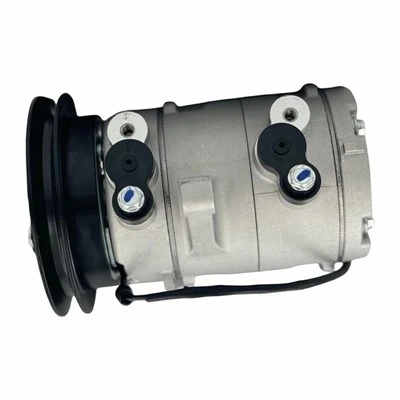
First off, let’s talk about why lubrication is so important in automotive compressors. These compressors are like the heart of your car’s air – conditioning system. They work hard, compressing refrigerant gas to cool down your vehicle’s interior. Without proper lubrication, the moving parts in the compressor would grind against each other, causing excessive wear and tear, and eventually, the compressor would break down. That’s a headache no one needs, especially when it comes to your car’s comfort system.
Now, there are a few different types of lubricants commonly used in automotive compressors, and each has its own set of characteristics and applications.
Mineral Oil
Mineral oil was one of the first types of lubricants used in automotive compressors. It’s derived from crude oil and has been around for a long time. One of the big advantages of mineral oil is its low cost. It’s relatively inexpensive to produce, which makes it an attractive option for some compressor manufacturers.
However, mineral oil doesn’t mix well with some of the modern refrigerants, like R – 134a and R – 1234yf. These refrigerants are more environmentally friendly than the older ones, but they have different chemical properties. Mineral oil tends to separate from these refrigerants, which can lead to issues with lubrication in the compressor.
Another drawback is its limited performance in high – temperature environments. Automotive compressors can get pretty hot during operation, and mineral oil may not be able to provide adequate lubrication under extreme heat. This can result in increased wear on the compressor’s components and a shorter lifespan.
Alkylbenzene (AB) Oil
Alkylbenzene oil is a synthetic – like lubricant that was developed as an alternative to mineral oil. It has better compatibility with some of the more recent refrigerants compared to mineral oil. AB oil has good solubility with refrigerants like R – 134a, which means it can mix well and provide consistent lubrication throughout the compressor.
One of the benefits of AB oil is its stability over a wide range of temperatures. It can handle the heat generated by the compressor during normal operation without breaking down easily. This stability helps to reduce the risk of wear on the compressor’s moving parts and extends its service life.
However, AB oil also has some drawbacks. It’s a bit more expensive than mineral oil, which can increase the overall cost of the automotive compressor. Additionally, it may not be as compatible with the newest generation of low – Global Warming Potential (GWP) refrigerants, like R – 1234yf.
Polyolester (POE) Oil
Polyolester oil is currently one of the most commonly used lubricants in automotive compressors, especially those using R – 134a and R – 1234yf refrigerants. POE oil has excellent compatibility with these modern refrigerants. It can dissolve in the refrigerant and form a stable mixture, which ensures that the compressor’s moving parts are properly lubricated at all times.
One of the great things about POE oil is its high – temperature performance. It can withstand the extreme heat generated by the compressor without losing its lubricating properties. This makes it ideal for use in automotive applications, where the compressor can operate at high temperatures, especially in hot climates.
Another advantage is that POE oil has good anti – wear properties. It forms a protective film on the surfaces of the compressor’s components, reducing friction and preventing damage. This helps to extend the lifespan of the compressor and ensures reliable operation.
But there are also some challenges with POE oil. It’s hygroscopic, which means it absorbs moisture from the air. If moisture gets into the compressor along with the POE oil, it can cause corrosion and other problems. So, proper handling and storage of POE oil are crucial.
Polyalkylene Glycol (PAG) Oil
PAG oil is another type of lubricant used in automotive compressors, especially in some older systems and those that use specific types of compressors. PAG oil has good lubricating properties and can provide effective protection for the compressor’s components.
It’s also known for its good anti – foaming characteristics. Foaming can be a problem in compressors, as it can reduce the efficiency of the lubrication and cause damage to the compressor. PAG oil helps to prevent foaming, ensuring smooth operation.
However, PAG oil has some significant drawbacks. It’s very hygroscopic, even more so than POE oil. This means that it requires extremely careful handling to avoid moisture contamination. Also, PAG oil can be more expensive than other types of lubricants, and it may not be as readily available in some areas.
So, how do we choose the right lubricant for an automotive compressor? Well, it depends on a few factors. The type of refrigerant used in the system is a major consideration. As I mentioned earlier, different lubricants have different levels of compatibility with refrigerants. You need to make sure that the lubricant you choose will work well with the refrigerant in your compressor.
The operating conditions of the compressor also play a role. If the compressor is going to be used in a hot climate, a lubricant with good high – temperature performance, like POE oil, would be a better choice. On the other hand, if cost is a major concern and the refrigerant is compatible, mineral oil or AB oil might be more suitable.
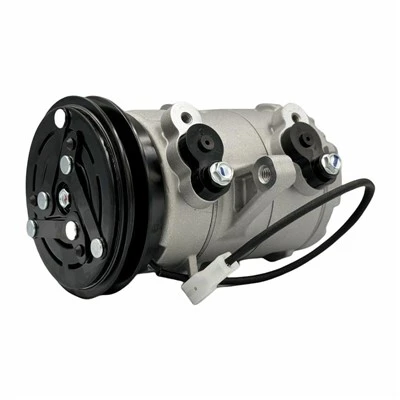
As a supplier of automotive compressors, we understand the importance of getting the right lubricant for your compressor. We work closely with our customers to determine the best lubrication solution based on their specific needs. Whether you’re a car manufacturer looking to source compressors for your new models or a repair shop needing to replace a compressor in a customer’s car, we’ve got you covered.
Agricultural AC Compressor If you’re in the market for automotive compressors and want to learn more about the lubrication options available, I’d love to have a chat with you. Reach out to us to discuss your requirements, and we can help you make the best decision for your automotive compressor needs. Let’s work together to keep your cars cool and your compressors running smoothly!
References
- "Automotive Air Conditioning Systems" by Drew Tibbetts
- "Refrigeration and Air Conditioning Technology" by William C. Whitman, William M. Johnson, John A. Tomczyk, and Eugene Silberstein
- Industry whitepapers on automotive compressor lubrication from major refrigerant and lubricant manufacturers
Jiangsu Nuoyan New Energy Vehicle Air Conditioning Co., Ltd.
With abundant experience, we are one of the most professional automotive compressor manufacturers and suppliers in China. We warmly welcome you to buy customized automotive compressor at competitive price from our factory. Also, quotation is available.
Address: No. 7 Xingyuan Road, Huangqiao Economic Development Zone, Taixing City, Jiangsu
E-mail: nuyantech2026@163.com
WebSite: https://www.nuyantech.com/
