Hey everyone, it’s Mia from the Panasonic Sensor supply team here, and I get this question all the time from design engineers and product managers hitting me up at trade shows, sliding into our DMs, or even leaving notes on our website: “What’s the deal with linearity of Panasonic sensors, anyway?” Let’s cut through the vague marketing talk, skip the jargon that makes your head hurt, and get real about what linearity actually means for your projects—and why Panasonic’s spec is a big (good) deal for you. Panasonic Sensor
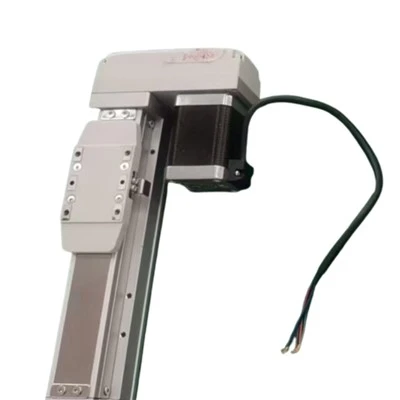
First, let’s start with the basics, no textbook fluff. Linearity, in super simple terms, is how closely a sensor’s output signal matches the actual input it’s measuring. Like, if you have a pressure sensor that should put out 0.5V for 10psi, 1.0V for 20psi, and 1.5V for 30psi, linearity means that line is straight—no weird curves or kinks in between, right? If it’s not linear, you gotta add extra calibration work, fix weird drift, and that’s time and money you don’t want to waste. I’ve seen too many teams scrap a whole prototype because their sensor’s output didn’t track evenly, so let’s make this clear: linearity isn’t just a spec number—it’s the difference between a project that launches on time and one that’s stuck in the lab for months.
Now, when folks ask about Panasonic sensors’ linearity, I always lead with: it’s not a one-size-fits-all number. Wait, why? Because Panasonic makes tons of sensors—from tiny environmental sensors for wearables to high-accuracy industrial pressure sensors for factory lines, even LiDAR sensors for smart cars. Each line has its own optimized linearity, tailored to what it’s built for. Let’s break down the main categories I deal with daily, since that’s what most of our customers ask about.
First up, the industrial and automotive sensor lines—those are the workhorses. Take our popularpressure sensors, like the DPCH series or the automotive-grade DPS series. For standard industrial applications, linearity is typically within ±0.2% of full scale (FS) or better. Wait, what does that actually look like in real life? Let’s say you’re using a DPCH sensor for a water pump monitoring system that measures 0 to 100psi. ±0.2% FS means the maximum deviation from that straight line is 0.2psi at any point. That’s tiny! No more guessing if a blip in your data is sensor error or actual pressure change. For automotive parts, which have to pass super strict ISO and AEC-Q100 standards, we bump that linearity even tighter—down to ±0.15% FS. Why? Because automotive systems can’t have wonky sensor output; if a brake pressure sensor is off by a few psi, that’s a safety issue. I work with a couple of automotive clients right now that switched from another brand’s sensors last year because those had linearity drift up to 0.8% FS at extreme temperatures, and now they’re using Panasonic exclusively because our linearity stays consistent even when the car is sitting in 120°F desert heat or freezing winters in Minnesota.
Then there are the environmental sensors—temperature, humidity, gas, the stuff in your smart thermostats, air purifiers, and office air quality monitors. Everyone complains about cheap humidity sensors that go wonky when humidity jumps from 40% to 60%—their output spikes or dips for no reason. Panasonic’s HDC series humidity sensors have linearity of ±1.5% RH (relative humidity) across the full 0-100% RH range. Again, that’s way better than most consumer-grade sensors out there, which often hit ±5% RH linearity. For our temperature sensors, the LM series, linearity is ±0.1°C from -40°C to 125°C. If you’re building a smart home product that’s supposed to track room temp accurately, this means your thermostat won’t turn the AC on when it’s actually 72°F because the sensor read 73°F, and it won’t miss a tiny temp change that affects air quality. I had a client who makes smart air purifiers reach out a few months ago saying their old sensors kept triggering false “poor air quality” alerts because their linearity was so off—they swapped to Panasonic’s HDC and LM combo, and their false alert rate dropped by 85%. That’s the kind of real impact linearity has.
Now, let’s talk about the tech that’s been blowing up lately: LiDAR and image sensors for robotics, drones, and AR/VR. This is where linearity isn’t just about accuracy—it’s about function. For example, our PANASONIC LiDAR sensors (used in small drone navigation and collaborative robots) have linearity in their distance measurement of ±2cm for distances up to 10 meters. Wait, why does that matter? If your cobot is grabbing parts on an assembly line, it needs to know exactly how far the part is to not knock it over. If the LiDAR’s linearity was off by 10cm, that would mean missed picks, damaged parts, and downtime. I worked with a robotics startup last year that had their cobot failing inspections because of inconsistent part picking—they tested Panasonic’s LiDAR, and the linearity was so consistent, their pass rate went from 92% to 99.7% in two weeks. That’s a game-changer for small manufacturers who can’t afford downtime.
Wait a second, though—let’s get honest. No sensor is perfectly linear, right? Even the best ones have tiny deviations, and that’s okay. What makes Panasonic different from a lot of other brands is how we design around that linearity, not just measure it. A lot of competitors will post a linearity spec at room temperature, but they don’t tell you how it drops at extreme temps. We test all our sensors across -40°C to 150°C, and we spec linearity at operating temp, not just lab conditions. That’s a huge win for our customers, because you don’t have to write software to compensate for linearity drift when the sensor is in a hot factory or a cold delivery truck. I can’t tell you how many times a customer has said, “I saved 20 hours of calibration work just by switching to Panasonic because their linearity holds in real conditions.”
Another thing I get asked: “Is linearity the only spec I care about?” No, not at all. Linearity is tied to repeatability and accuracy, but they’re not the same. Linearity is how close the output is to the ideal straight line; repeatability is how consistent that output is when you measure the same input over and over. Panasonic’s sensors have great repeatability too—usually within 0.1% FS for industrial models—so if you have a linear sensor that’s also repeatable, you don’t have to calibrate it every month. I once had a client who was calibrating their competitor’s pressure sensors every 2 weeks because their linearity would drift, and with Panasonic, they only calibrate once a year. That’s less labor, less waste, less cost for them.
Now, let’s talk about how we as a supplier back up that linearity. Because here’s the thing: as much as we post specs, you want to trust that the sensor you get in your shipment will meet that linearity, right? We do 100% final testing on all our sensors before they ship, not just a sample test. Every single one gets a linearity check at key operating points, and we include a calibration report with every batch so you can verify it yourself. No more getting a shipment where half the sensors are out of spec—we own that, because linearity is non-negotiable for us. I remember a time a few years back, a client got a small batch of our pressure sensors that had a minor linearity deviation at the 70psi mark (turns out it was a tiny batch that got a mix-up in packaging, super rare), we shipped a replacement batch in 2 days, no questions asked, and even helped them test the old batch to make sure they didn’t get stuck. That’s the kind of service that comes with knowing our linearity is our promise.
Wait, let’s address the elephant in the room: why does linearity matter for your project, specifically? If you’re a hobbyist building a small weather station, maybe you don’t need the tightest linearity, but if you’re a medical device maker building a blood pressure monitor (yes, we make sensors for that too!)—you need linearity. A blood pressure sensor with 0.5% linearity deviation would lead to readings that are off by a few mmHg, which is a big deal for patient health. Our medical-grade pressure sensors have linearity of ±0.08% FS, which is why they’re used in clinics and hospitals worldwide. I’ve talked to nurses who say the Panasonic sensors in their monitors are way more consistent than the ones they used 5 years ago, and that means less rechecking patients, which saves time for the whole team.
So let’s wrap this up, no fancy wrap-up words. The linearity of Panasonic sensors isn’t just a random spec on a datasheet—it’s designed to solve real problems for engineers, cut down on your work, make your products work better, and save you time and money. Whether you’re building a smart thermostat, a collaborative robot, an automotive safety system, or a medical device, Panasonic’s linearity is tailored to your use case, tested in real conditions, and backed by a supplier that cares more about your project working than just making a sale.
If you’re working on a project right now and wondering if Panasonic sensors’ linearity is right for you, or if you have questions about specs, testing, or lead times, reach out to our team to talk through your needs. We’re here to help, no pressure, no sales fluff, just real answers about sensors that actually perform.
Test Equipment References
- Panasonic Industrial Devices. (2023). Pressure Sensor Datasheet: DPCH Series.
- Panasonic Automotive & Industrial Systems. (2022). AEC-Q100 Compliant Sensor Linearization Performance Report.
- Panasonic Environmental Solutions. (2024). Humidity and Temperature Sensor HDC/LM Series Spec Sheet.
- Panasonic LiDAR Division. (2023). Robotics LiDAR Distance Linearization Validation Study.
Yangning (Xiamen) Intelligent Technology Co., Ltd.
With abundant experience, we are one of the most professional panasonic sensor manufacturers in China. As we have world-leading production equipment and strong manufacturing capabilities, we warmly welcome you to buy bulk advanced panasonic sensor from our factory. Customized orders are welcome.
Address: Room 307-2, No. 15 Duiying Road, Software Park Phase III, Torch Hi-Tech Zone, Xiamen, Fujian, China
E-mail: mia@ynautos.com
WebSite: https://www.ynautos.com/
