If you’ve ever walked through a busy manufacturing facility—whether it’s a food processing plant, an automotive parts warehouse, or an electronics assembly line—chances are you’ve spotted plastic crates stacked near production stations, rolling on pallets, or being loaded onto delivery trucks. For years, factory operators and supply chain managers have debated whether these lightweight, seemingly disposable containers can hold up to the rigors of daily industrial use. As a plastic crate supplier that’s worked with factories across North America for over a decade, I’m here to cut through the hype and share what I’ve learned: not only can plastic crates be used in factories—they’re often one of the most underrated, cost-effective upgrades a production team can make. Let’s break this down with real-world data, on-the-job examples, and the hard truths I’ve picked up from watching crates survive 12-hour shifts in temperatures that swing from freezing to scorching. Plastic Crate
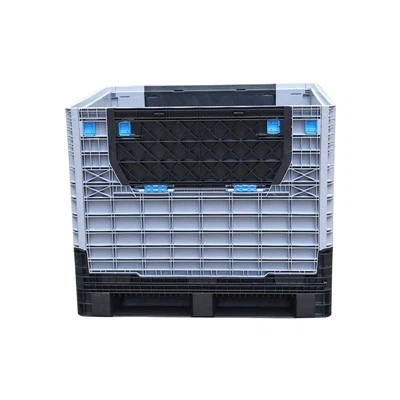
First, let’s address the elephant in the factory: durability. A lot of people assume plastic crates are flimsy, destined to crack after a single drop or a few months of rough handling. That’s the case for cheap, thin, low-grade plastic crates sold at big-box stores for moving household items. But industrial-grade plastic crates—what my company supplies—are made from high-density polyethylene (HDPE) or polypropylene (PP), materials engineered to handle constant heavy use. Last year, we supplied crates to a metal stamping factory in Detroit that moves 50-pound steel brackets between pressing stations 16 hours a day, six days a week. After 18 months, their original set of 2,000 crates had only a dozen minor cracks, all of which were repaired with a simple HDPE welding kit (a service we offer for free to our long-term clients). Compare that to the wooden crates they used before: those split, splintered, and needed replacement every three to four months, costing them nearly $15,000 a year in repairs and replacements alone. The plastic crates? They’ve already paid for themselves in savings, with no sign of slowing down.
Durability isn’t just about withstanding drops or rough treatment—it’s about adapting to factory conditions, too. Factories don’t operate in climate-controlled bubbles. A food and beverage plant might wash down their floors with high-pressure hoses and industrial cleaners multiple times a day, while a plastic extrusion plant works in 120°F heat from melting machinery, and a pharmaceutical warehouse keeps inventory at 40°F to meet safety standards. HDPE and PP crates are resistant to most chemicals, from mild soaps to heavy-duty degreasers, and they don’t warp, fade, or degrade when exposed to extreme temperatures. I remember a client in the frozen food industry in Minnesota that used wooden crates for storing frozen poultry parts before switching to our stackable, closed-top plastic crates. During a 2022 winter deep freeze where temperatures dropped to -25°F, wooden crates became brittle and cracked when moved with forklifts, but their plastic crates handled the cold without a single issue. When summer hit, the same crates were moved to an indoor storage area that hovered around 90°F, and they still retained their shape—no warping, no sagging, no need for special maintenance.
Next, let’s talk about efficiency, a word that’s music to any factory manager’s ears. Factory time is money, and any process that slows down production or causes delays cuts into profits. Plastic crates solve several common factory pain points that other container types (wood, metal, cardboard) struggle with. First, stackability. Most industrial plastic crates are designed to nest when empty and stack securely when full, with reinforced corner posts that lock into place. A metal crate, by contrast, is heavy when empty, so nesting it to save space isn’t worth the effort. Cardboard? It’s a nightmare for nesting and takes up twice as much empty space as plastic, and it gets soggy or damaged in just a few days if there’s any moisture. Our Detroit metal stamping client calculates that their plastic crates cut down on loading and unloading time by 30%: they can stack 15 full crates on a single pallet, vs. just 10 wooden crates, and when empty, 100 plastic crates fit into the space of 35 full ones, making it easier to move them with forklifts or hand trucks. That extra time adds up—they can process 20% more orders each week without adding extra staff.
Another efficiency win is cleanliness, a non-negotiable for many factories, especially in food, pharmaceuticals, and electronics. Wooden crates absorb oil, food residue, and bacteria deep into their grain, no matter how many times you wash them. Metal crates can rust over time, leaving metal shavings that contaminate products. Cardboard is porous and can’t be sanitized properly. Plastic crates? Their smooth, non-porous surface lets you wipe them down in minutes, and they can even go through industrial dishwashers at high temperatures without any damage. Our food processing clients often run their plastic crates through a wash cycle with food-grade sanitizer after each use, and they meet all FDA and USDA standards for food contact. A pharmaceutical client in Indiana uses our closed-top plastic crates to transport blister packs of medication between their packaging and shipping stations; the closed tops keep dust and debris out, and the smooth surface means no leftover product gets stuck in crevices that could cause cross-contamination. We once had a client who switched to plastic crates and passed a surprise FDA inspection with zero violations, while their old wooden crate system had failed two inspections the year before. That alone saved them hundreds of hours of rework and potential fines.
Cost is the final piece of the puzzle, and I know it’s what most factory managers care about most. When I first started in this business 12 years ago, I had a client tell me, “Plastic crates are too expensive—wood is cheaper upfront.” But here’s the mistake many people make: they only look at the initial purchase price, not the total cost of ownership. Let’s do the math. A standard industrial plastic crate costs $15 each, and has a lifespan of 5 to 7 years with proper care. That’s a cost of $2.14 to $3 per year per crate. A wooden crate costs $8 each, but only lasts 3 to 4 months, so that’s $32 per year per crate—more than 10 times the cost of a plastic crate. Add in hidden costs: wood splinters can damage products, leading to returns or waste; wood requires regular maintenance (sanding, sealing, replacing broken slats); cardboard has to be disposed of, adding waste management fees; metal crates are heavy, so you need more manpower to move them. My Indiana pharmaceutical client spent $12,000 upfront for 800 plastic crates 4 years ago. In that time, they would have spent over $120,000 on wooden crates for the same amount of use. That’s not a small difference—for a small to medium factory, that extra $108,000 can go toward upgrading equipment, hiring staff, or expanding production space.
Of course, no product is perfect, and plastic crates aren’t a one-size-fits-all solution. For factories that handle extremely heavy loads (like 200-pound metal castings), we recommend reinforced, double-wall plastic crates that have extra structural support. For factories that need to see the contents inside (like those handling small electronic parts), we supply vented or clear plastic crates that let staff inspect products without opening the crate. We also work with clients to design custom crates for their specific needs—whether that’s a crate with dividers to separate fragile parts, crates with RFID tags for inventory tracking, or crates that fit exactly onto their existing conveyor belts. What I’ve learned over the years is that the best plastic crate for a factory isn’t the most expensive one—it’s the one designed to fit their unique workflow.
I’ll be honest with you: when I first started selling plastic crates, I was skeptical myself. I’d spent years working in warehouse management, and I’d seen factories stick with wood and metal because that’s “what they’d always used.” But after visiting hundreds of factories, seeing the savings, the efficiency gains, and the reduction in product waste, I became a true believer. Plastic crates aren’t just a replacement for older container types—they’re a tool that can make a factory run smoother, safer, and more profitable.

If you’re a factory manager, production supervisor, or supply chain lead who’s tired of replacing broken crates, dealing with contamination issues, or wasting time moving containers, let’s talk. I’ve helped factories of all sizes across the country find the right plastic crates for their needs, and I can provide a free, no-obligation assessment of your current container setup, along with a breakdown of potential savings. Whether you need a small batch of crates to test out or a full fleet for your entire production line, we have options that fit every budget and workflow. Don’t let outdated container systems hold your factory back—reach out today to start a conversation that could save you time, money, and headaches for years to come.
Plastic Pallet Container References
- American Society for Quality (ASQ). (2021). "Contamination Control in Manufacturing: A Guide to Material Selection." Quality Progress, 54(6), 28-35.
- National Association of Manufacturers (NAM). (2022). "Total Cost of Ownership for Industrial Packaging: A Comparative Analysis of Wood, Metal, and Plastic Containers." Manufacturing Insights Report.
- Food and Drug Administration (FDA). (2020). "Grade A Standards for Food Contact Substances: High-Density Polyethylene Packaging." FDA Food Safety Modernization Act (FSMA) Guidance Document.
- Occupational Safety and Health Administration (OSHA). (2021). "Manual Material Handling Best Practices for Industrial Packaging." OSHA Safety Bulletin 03-21.
- Plastics Industry Association (PIA). (2022). "Industrial Plastic Packaging: Durability, Efficiency, and Sustainability in Modern Manufacturing." PIA Technical Report Series, No. 19.
Shanghai Qusheng Plastics Co., Ltd.
As one of the leading plastic crate manufacturers and suppliers in China, we have world-leading production equipment and strong manufacturing capabilities. Please rest assured to wholesale customized plastic crate from our factory. For quotation, contact us now.
Address: No.85 Hengtang Road, Huaqiao Town, Kunshan City, Jiangsu Province
E-mail: Totepallet-inquiry@plastic-crate.com
WebSite: https://www.totepallet.com/
