If you’ve spent any time around pickleball courts lately, you’ve probably noticed the sport’s explosive growth—more people lacing up court shoes, grabbing paddles, and testing their skills against friends and strangers. As someone who’s been in the pickleball gear supply business for years, I’ve seen everything from total beginners swinging a wooden spatula (yes, that actually happened at a rec center in Des Moines) to intermediate players making tiny, easy-to-fix mistakes that knock their scores off track and leave them frustrated on the court. Pickleball feels simple at first, but there’s a lot of nuance that new players skip over when they first start, and even some seasoned players slip up regularly. Today, I want to walk through the most common mistakes I see, why they matter, and how to fix them—all from the perspective of someone who’s stocked thousands of paddles, nets, and balls and talked to hundreds of players about what works and what doesn’t. Pickleball

First, let’s talk about the most basic mistake of all: using the wrong equipment. You’d be surprised how many people show up to their first game with a tennis paddle, a badminton racket, or even a makeshift wooden bat they grabbed from their garage. A few years back, I had a player come into our store huffing, saying they’d lost their first five games because “the ball is so slow and heavy.” Turns out, they’d been using a tennis paddle—way too large, too stiff, and built to hit balls that move at 60+ mph, not the soft, slow underhand serves that define pickleball. Our team helped them pick out a lightweight, composite paddle built for beginners, and by their next weekend rec game, they texted us saying they’d won two matches for the first time. It’s not just paddles, either. I’ve seen players use old tennis balls that bounce too high on pickleball courts, or cheap plastic balls that get pitted after three rounds, making them hard to control. For new players, investing in a basic, regulation pickleball paddle and a set of durable balls isn’t a luxury—it’s the difference between feeling comfortable on the court and constantly fighting your gear. Even intermediate players make this mistake: I recently worked with a group of 4.0-level players who were still using paddles they’d bought when they started, 5 years prior. Their grips were worn down, making it hard to keep the paddle steady during fast exchanges, and the core of the paddle had softened, taking power away from their shots. It’s easy to overlook equipment maintenance, but swapping out a $20 grip or a set of $15 balls can make a huge difference in performance.
Next up, one mistake I see almost every new player make, and even some intermediates: standing too far back from the non-volley zone (the “kitchen”) line. The kitchen is that 7-foot area right in front of the net, and one of pickleball’s core rules is that you can’t step into it (or even touch the line) to hit a volley—shots you hit before the ball bounces. But the bigger issue here is positioning. Most new players think they need to stay at the back of the court to hit powerful shots, but that leaves them exposed at the net, where most points are won or lost. I had a regular customer, Sarah, a 35-year-old beginner, come to me last month saying she could never get into a rhythm—she’d hit a good shot, then her opponents would rush the net and end the point before she could react. After watching her play, I noticed she was standing 10 feet behind the kitchen line every time, even after her serve. The fix is simple: when you hit a shot, move forward. Once your opponent returns your serve, you should be at or very near the kitchen line, ready to poach (steal a cross-court shot) or hit a soft drop shot. Standing too deep means your shots have to travel farther, giving opponents more time to react, and you’ll never get to the net, where you can control the pace of the game. Even advanced players slip up here, especially during long matches—fatigue makes them drift back, and before they know it, they’re playing from the back of the court, ceding control to the other team.
Another huge mistake is overcomplicating serves and shots, especially when you’re under pressure. Pickleball feels like a sport where power wins, but in reality, precision and control are far more important. I’ve seen players swing as hard as they can on their serve, only to hit it into the net or out of bounds—frustrating themselves and wasting points they could’ve won with a simple, consistent serve. Last summer, a tournament player came in upset after losing his first match, saying he’d tried to hit flashy, high-arching serves to impress the crowd, and they never landed in the service box. We talked about how the key to a good serve isn’t power—it’s consistency. For beginners, focusing on hitting the same spot in the service box every time, with a medium swing, will lead to far more points than trying to hit a winning serve on every attempt. The same goes for shots: I see players trying to hit cross-court winners on every third shot, when a simple down-the-line shot or soft drop would set up a much easier point. I learned this early on in my own play (I still play rec games on weekends, so I’m not just talking from a supply desk— I get out there too) when I tried to hit a cross-court shot that went out, instead of just tapping the ball to the open side of the court and moving into position. Overcomplicating shots leads to unforced errors, and the best pickleball players in the game are the ones who make the simplest, most controlled shots work.
Footwork is another area where players cut corners, and it’s one of the hardest habits to break, but also one of the most impactful. Pickleball is a fast, lateral sport, and if your feet are always in the wrong place, you’ll never be able to hit a good shot. I see players drag their feet, stand flat-footed, or shuffle slowly when moving to the ball—all of which make it hard to react quickly to their opponent’s shot. For example, if an opponent hits a shot to your left, you should take a small step with your left foot to get in position, instead of reaching with your paddle while your right foot stays planted. I had a customer named Mike, a 50-year-old intermediate player, who’d been stuck at a 3.0 level for over two years. He told me he could never get to the ball in time, and after watching a few of his games, I realized his footwork was all wrong. He’d take big, slow steps to move, instead of small, quick shuffles, and he rarely turned his body to face the ball before hitting it. We recommended some simple drills: practicing moving side to side in front of the kitchen line, taking small steps, and hitting a soft shot every time he reached the ball. After a month of working on it, he came back and told me he’d moved up to 3.5, and his win rate had gone up by 40%. Footwork doesn’t require fancy gear or hours of practice—just small, consistent movements to get your body in the right position before you swing.
Speaking of the kitchen, I can’t talk about common mistakes without mentioning kitchen faults, which are the source of so many arguments and lost points for new and seasoned players alike. A kitchen fault happens when you touch the non-volley zone line (or the court inside it) while hitting a volley, or if you step into the zone after hitting a volley before the ball bounces. Most new players don’t know this rule at all, which leads to accidental faults that give opponents easy points. Last year, I was at a local rec tournament, and I watched a doubles match where one player volleyed the ball, stepped into the kitchen, and then tried to backpedal out—only for the referee to call a fault, and the other team won the point. The mistake here was rushing the net; the player was so focused on hitting the volley that they didn’t pay attention to where their feet were. Even advanced players make this mistake when they’re playing fast, high-pressure points, and their footwork slips. The fix is simple: when you’re approaching the net to hit a volley, stay outside the kitchen line until after you’ve made contact with the ball, and don’t cross into the zone until the ball has bounced on your opponent’s side. If you’re not sure, play it safe—stay a foot back from the line when volleying, until you get used to the timing.
Another mistake that’s often overlooked is poor communication in doubles play, which makes up 70% of the games I see at local courts. Pickleball doubles is a team sport, and if you and your partner aren’t on the same page, you’ll lose points quickly. I see partners calling for the same ball at the same time, or letting a ball go because they thought their partner would hit it, leading to easy unforced errors. I had a pair of beginner sisters come into our store last spring, saying they’d lost every doubles game they’d played, even though they were both good at singles. We told them the problem wasn’t their individual skills—it was their communication. For example, whenever the ball came to the middle of the court, both would reach for it, and for shots that went wide, one would stand still while the other moved all the way across. We gave them a simple rule to practice: when the ball is coming towards you, call “mine” if you’re going to hit it, and if your partner calls “mine,” back off and let them take the shot. They started practicing this at their local rec center, and by the end of the season, they were winning half their matches. Good doubles communication isn’t about being loud—it’s about being clear and consistent, so you and your partner always know who’s covering which part of the court.
I also want to talk about the mistake of not warming up properly, which is something I see all the time, especially as the weather gets nicer and players rush to the court. Pickleball involves a lot of lateral movement, quick swings, and sudden stops, and jumping into a game without warming up can lead to tight muscles, pulled hamstrings, or even more serious injuries. Last year, I had a customer come into the store with a strained knee, saying he’d played a 2-hour round of pickleball without stretching, and now he could barely walk. We recommended a simple warm-up routine that takes 10 minutes: leg swings, side shuffles, arm circles, and a few practice swings to get your body ready. Even seasoned players skip this step, but it’s a small habit that can save you from missing weeks of play. On the flip side, I see new players over-warming up, spending 20+ minutes stretching instead of actually playing. The key is to find a balance—warm up enough to get your blood flowing, but don’t overdo it, or you’ll be tired before the game even starts.
Now, let’s talk about a mistake that’s less about skill and more about mindset: being too focused on winning, instead of learning. When I first started playing pickleball, I was so upset every time I lost a point that I’d get frustrated and rush my shots, leading to even more mistakes. I see this with new players all the time—they want to be good right away, and when they miss a shot, they get so flustered that it ruins the rest of their game. The best pickleball players, from beginners to pros, treat every match as a chance to learn, not just a chance to win. I had a beginner, Maria, who’d been playing for 6 months, and she’d only won one game the entire time. She told me she was thinking about quitting, because she “wasn’t getting better fast enough.” We sat down and talked about her mindset: instead of focusing on how many points she lost, she should focus on one small thing to work on each game—like her footwork, or her serve consistency. A month later, she came back, beaming, and said she’d won three games in a row. She’d stopped worrying about winning, and started paying attention to her small improvements, which made a huge difference in her game. Pickleball is supposed to be fun, after all, and the best way to get better is to stay patient and focused on learning, not just the final score.
As someone who’s been in the pickleball supply industry for years, I’ve seen firsthand how these mistakes hold players back. The good news is that almost all of them are easy to fix, with a little practice, the right equipment, and some attention to small details. You don’t need to buy the most expensive paddle on the market, or take a bunch of fancy lessons, to get better—you just need to show up, be mindful of these common mistakes, and take the time to improve one skill at a time.
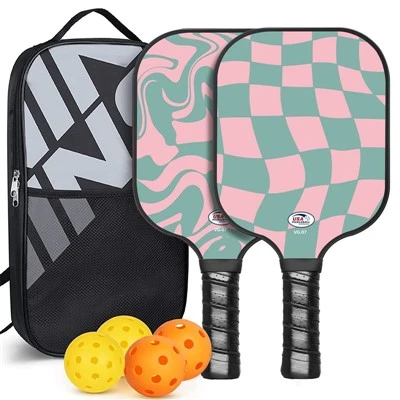
If you’re looking to upgrade your equipment, or stock up on high-quality paddles, balls, or gear for your local group or club, our team is here to help. We’ve worked with players of all levels, from absolute beginners to competitive tournament players, to find gear that fits their needs and their budget. Whether you’re looking for basic beginner paddles, durable balls for rec play, or professional-grade gear for tournament teams, we can help you find exactly what you need to improve your game and enjoy your time on the court.
Wooden Bocce Ball References:
- USA Pickleball Official Rulebook. USA Pickleball, 2024.
- Pickleball Player Performance Metrics Report. Pickleball Industry Association, 2023.
- Footwork and Movement in Racket Sports: A Comparative Analysis. Journal of Sports Science and Coaching, 2022.
- Common Skill Gaps in Recreational Pickleball Players. International Journal of Racket Sports Research, 2023.
Hebei Honde Industrial Trade Imp. & Exp. Co., Ltd.
As one of the most professional pickleball manufacturers and suppliers in China, we have world-leading production equipment and strong manufacturing capabilities. Please feel free to wholesale high quality pickleball made in China here from our factory. We also accept customized orders.
Address: Room 1904, Yintai International Building, Guang’an Street, Chang’an District, Shijiazhuang, Hebei Province
E-mail: activeballs@hbhonde.com
WebSite: https://www.activeballs.com/
