If you’re in the market for steel strip processing machinery, you’ve probably noticed that not all machines are created equal. As someone who’s spent years selling this gear (and fixing it when things go wrong), I can tell you that picking the right setup isn’t just about horsepower or a shiny UI. It’s about actually hitting your production goals without pulling your hair out over downtime or scrap. Let’s break down the real performance indicators that matter—no jargon overload, just the stuff that keeps your line moving and your bottom line healthy. Steel Strip Processing Machinery

First up, line speed consistency. This isn’t just “how fast does the machine go?”—it’s whether it holds that speed when the steel strip shifts, or a roll changes, or the motor has to work a little harder. I’ve seen way too many shops buy a machine that’s rated for 500 feet per minute, but it stutters all over the place below 300 because the speed control system is cheap garbage. For steel strip processing, inconsistency here leads to uneven cuts, misaligned coatings, or even breaks in the strip mid-run. That stops production cold and turns good steel into scrap. The real test? Ask the supplier (that’s me, wink) for in-house data on speed variation over an 8-hour shift under normal load. If the numbers bounce more than 2%, that machine’s not worth your cash.
Next, material yield. This is make or break, especially if you’re working with high-grade or custom steel that’s not cheap. Yield is basically how much of the incoming strip turns into usable finished product vs. scrap, and it’s tied to so many machine parts: blade sharpness, tension control, alignment systems, even how the machine handles edge trimming. A machine with a bad yield might only get 85% usable steel, while a well-tuned one hits 95%+. I once had a customer buy a used machine that “worked fine” for years only to realize they were throwing away $10k worth of steel a month because of poor yield. That’s the kind of hidden cost no sales sheet lists. When you’re checking this, ask about their precision guides—do the rollers adjust automatically for strip width, or do you have to crank them by hand and hope? Auto-adjust features cut down on human error and boost yield big time.
Then there’s precision dimensional accuracy. For most steel strip processing, whether it’s slitting, leveling, or stretching, your finished product has to hit tight tolerances—like within a thousandth of an inch for thickness or width. Mess that up, and your parts won’t fit into whatever they’re going into (think car panels, appliance frames, metal fasteners). What kills accuracy? Worn-out cutting blades, loose bearings, or a tension system that pulls too hard on one side of the strip. I’ve had customers bring in machines that were off by 0.003 inches just because they skipped calibrating the roller alignment. A good machine will have real-time monitoring for width and thickness, so if it slips out of spec, it alerts you immediately instead of letting you run bad product for hours. That’s not a “nice-to-have” feature—it’s how you avoid sending defective parts to your clients.
Downtime is another huge one, and it’s not just unplanned stops. Planned downtime for maintenance counts too, because that’s time you’re not making money. Steel strip machines have a lot of moving parts: blades that need sharpening, belts that stretch, lubrication points that require regular checks. A machine that needs a full blade change every shift vs. every 5 shifts means more lost production. Also, how easy is it to replace parts? If you have to wait 2 weeks for a custom blade from the manufacturer, that’s 2 weeks of downtime you can’t afford. When I sell a machine, I highlight parts commonality—like using standard size bearings or off-the-shelf blades—because that cuts down on lead times and maintenance costs. Unplanned downtime should be under 5% of total operating time for a good machine; anything over that, you’re bleeding cash.
Energy efficiency is way more important than most people think these days, especially with utility costs spiking. Steel processing is power-intensive, so a machine that wastes electricity isn’t just bad for your bills—it’s bad for your carbon footprint, which your clients might even care about now. Look for machines with variable frequency drives (VFDs) that adjust power use based on load, instead of running full blast no matter what. For example, if a line is running at half speed, a VFD will pull less power, not just waste the extra energy. I’ve had customers switch to a more efficient machine and cut their monthly power bills by 15%—that’s pure profit. Also, check if the machine has idle mode: when it’s not processing strip, does it shut down non-essential parts automatically? That’s a small feature but adds up big over a year.
Handling variability in incoming material is a test of a machine’s real performance, not just the ideal specs. No two steel coils are exactly the same—some are a tiny bit thicker, some have surface imperfections, some have slight width variations. A cheap machine will choke on these, leading to strip breaks or defects. A good machine has adaptive controls that adjust tension or speed on the fly to compensate. I had a customer last year working with coil that had inconsistent thickness; their old machine would break the strip every other roll, but the new one I sold them had sensors that tweaked the roller pressure automatically, so they only had 1 strip break in 10 rolls. That’s the difference between a machine that works for your actual job and one that only works in a perfect lab setting.
Operator ease is a performance indicator too, believe it or not. If your team can’t run the machine without 2 weeks of training, or they’re constantly adjusting knobs instead of letting the machine do its job, that leads to mistakes and slower production. Look for intuitive HMI (human-machine interface) screens, auto-calibration features, and pre-set recipes for common strip sizes and grades. I’ve seen machines with clunky, outdated screens that make even seasoned operators mess up; switching to a modern, touch-based interface cut my customer’s training time by 70%. Less operator error means fewer defects, faster changeovers between jobs, and less frustration all around.
Wait, and let’s not forget long-term durability. A machine that works great for 6 months but starts falling apart after a year is a bad investment. This ties into build quality: are the frames made of solid steel, flimsy aluminum? Are the bearings high-grade or cheap imports that wear out fast? I always tell customers to ask for real-world testimonials from other shops running the same machine in similar conditions. If a supplier can only show you test data in their warehouse, that’s not as good as a plant that’s run 24/7 for 3 years with no major issues. Durability translates to lower replacement costs and fewer emergency calls, which is what keeps your line running year after year.
Now, how do you put all these together? It’s not about checking a box for each indicator—it’s about weighing what’s most important for your business. If you’re running high-volume, tight-tolerance parts, precision and yield are king. If you’re running smaller batches with a lot of different strip sizes, changeover time and operator ease matter more. The worst mistake you can make is chasing the highest “rated” speed or the cheapest price without looking at these real, day-to-day performance metrics.
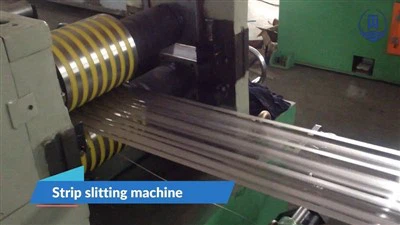
If you’re shopping around for steel strip processing machinery and want to cut through the sales fluff, I’m here to help. I’ve spent years working with shops of all sizes, from small fabricators to big auto parts makers, and I can walk you through what specs actually fit your needs, no hidden agendas. Whether you’re upgrading your current line or setting up a new production space, let’s chat about how to find a machine that doesn’t just meet specs—it makes your business more efficient and profitable.
Welding Wire Winding Machinery References:
- Steel Processing Machinery Performance Standards, National Association for Metal Forming, 2022
- Industrial Automation for Steel Strip Lines, Society of Manufacturing Engineers, 2021
- Energy Efficiency Guidelines for Metal Fabrication Equipment, U.S. Department of Energy, 2023
- Yield Optimization in Slitting and Leveling Operations, International Steel Association Technical Report, 2020
Three Water Machinery Co., Ltd.
Three Water Machinery Co., Ltd. is one of the most reliable manufacturers and suppliers of steel strip processing machinery in China. With abundant experience, we warmly welcome you to buy advanced equipment for sale here and get quotation from our factory. Contact us for more details.
Address: No.15, Jiaye Road, Liuanzhuang Industrial Park, Beichen District, Tianjin, China
E-mail: sales@eqet.com
WebSite: https://www.eqet.com/
