If you’re deep in the magnesium die casting game, you know the right machine isn’t just a piece of equipment—it’s what separates a batch of perfectly formed, low-defect parts from a nightmare of stuck dies, porosity, and wasted raw magnesium. I’ve been running a magnesium die casting shop for 8 years now, and I’ve tested just about every common machine out there. Today, I’m breaking down the ones we rely on most, the ones that let us deliver consistent, lightweight magnesium parts for everything from EV components to medical devices, and the ones I’d recommend to anyone shopping around. Magnesium Die Casting

First off, let’s get a quick magnesium die casting 101 out of the way real quick—no boring textbook stuff. Magnesium is light, stiffer than aluminum for its weight, and takes a really smooth finish, but it’s way more finicky than aluminum when it comes to melting and filling. It oxidizes fast, it’s prone to cracking if the die isn’t controlled right, and you can’t just slap any old die casting machine on it without tuning things. That’s why the machines I’m talking about are tailored specifically for that, not just general-purpose ones.
The first one, and the workhorse in our shop, is the cold-chamber die casting machine. Wait, before you roll your eyes and go “that’s for aluminum,” hear me out—cold-chamber isn’t just for aluminum anymore, and for magnesium parts that are a bit larger or need higher precision, this is non-negotiable. Here’s why it works for magnesium: you melt the magnesium in a separate furnace (kept under a little cover gas to stop oxidation, by the way—we use a mix of SF6 and nitrogen, don’t ask how many times I’ve accidentally opened the furnace too fast and got a tiny flash), then you ladle the molten metal into a shot chamber that’s not attached to the furnace. That keeps the metal from sitting around and oxidizing more than it needs to, which cuts down on defects.
Our cold-chamber machines range from 200 tons to 1600 tons, depending on the part. Smaller ones for things like laptop frames or phone camera housings, bigger ones for EV battery trays or motorcycle engine parts. The key specs here for magnesium: we need a shot speed that’s high enough to fill the die before the magnesium cools, but not so high that it traps air (that’s where porosity comes from, and porosity in magnesium is a death sentence for structural parts). Most modern cold-chamber machines have computerized shot controls now, so you can adjust pressure and speed in 10 different stages—game changer. I used to have an old 300-ton machine that only had two settings: fast and faster, and we threw out half the parts. Now? We run a 500-ton cold-chamber for our most popular battery tray parts, and our defect rate is under 2%. That’s the difference.
Next up, the hot-chamber die casting machine. This is the other big one, and it’s way underrated for small, intricate magnesium parts. Hot-chamber means the shot chamber is submerged in the molten magnesium furnace, so it doesn’t require a ladling step—everything is automatic. That’s a huge plus for speed: cycle times are 20-50% faster than cold-chamber, which is great for high-volume small parts. We use hot-chamber machines for things like power tool housings, small electronic brackets, and medical device components like insulin pump casings. These parts don’t need to be super structural, so the lower pressure of a hot-chamber machine is totally fine, and the fast cycles keep our costs down.
Wait, but why don’t we use hot-chamber for everything? Because of the melting point. Magnesium melts at around 1202°F (650°C), and some hot-chamber machines use steel components that can hold up, but you have to be careful with erosion. If you’re running high volumes of hot-chamber, you might need to replace the shot chamber or nozzle every few months, which adds up. Also, hot-chamber machines top out at around 250 tons, so they can’t handle big parts. For our small parts, though, they’re perfect. We have three 150-ton hot-chamber machines that run 24/7, and we crank out 10,000+ small housings a day with barely any issues.
Then there’s the semi-solid die casting machine, which is the new kid on the block but has completely changed how we make high-precision magnesium parts. Semi-solid means you take magnesium that’s about 50% solid, 50% liquid (it’s like a slurry, not fully melted or fully solid), and inject that into the die. Why is that better? Less air entrapment, so almost no porosity. The parts are way stronger, they can be heat treated without cracking, and you get a way smoother surface finish that cuts down on post-processing. We got our first semi-solid machine two years ago, and we now make parts for electric vehicle motor mounts that go through rigorous crash tests—before, we had a 10% failure rate on those, now it’s zero.
The catch with semi-solid machines? They’re way more expensive upfront, and the process is trickier to set up. You can’t just use regular magnesium ingots—you need specialized feedstock that’s made to be semi-solid, and you have to control the temperature super closely. If the slurry is too hot, it turns into liquid and defeats the purpose; too cold, it gets stuck in the shot chamber. But if you’re making structural parts for EVs, aerospace, or medical devices, the investment is worth it. We only have one semi-solid machine right now, but we’re adding another next quarter because the demand for those high-performance parts is blowing up.
Wait, should I mention vacuum-assisted die casting machines? Yeah, those are a specialized version of both cold and hot chamber, and we use them for really tight-tolerance parts. The problem with regular die casting is that when you inject the metal, you trap air in the die cavities, which causes porosity. Vacuum systems suck the air out of the die before you shoot the metal, so you get way cleaner parts. We use vacuum-assisted cold-chamber machines for parts like drone frames, where weight and strength are everything. Those frames need to be rigid, no hidden porosity that would cause a crash mid-flight, so the vacuum system is non-negotiable. The downside is that it adds a step to the cycle, so it’s a bit slower, but the part quality is worth it.
Let me also clarify what’s not a magnesium-specific machine, because I see new suppliers get confused here. A lot of people will try to sell you a general aluminum die casting machine and say it works for magnesium—don’t do it. Aluminum melts at a higher temperature, around 1220°F (660°C), but it’s less reactive than magnesium, so the machine’s furnace, shot chamber, and die coatings are different. Magnesium needs die coatings that don’t react with it, furnace atmospheres that prevent oxidation, and shot controls calibrated for magnesium’s lower viscosity. A general aluminum machine will run magnesium, but you’ll have way more defects, higher scrap rates, and eventually wear out the machine faster. We tested that once, early in our shop, and we ended up replacing two shot chambers in a year—total waste of money.
Now, let’s talk about how we pick which machine to use for a part, because that’s the real question, right? If you send us a drawing for a part, first we look at the size and required strength. If it’s under 2 pounds, non-structural, 10,000+ units a month, we’ll go with a hot-chamber machine—fast, cheap, consistent. If it’s over 2 pounds, structural, needs high precision, we’ll use a cold-chamber machine, and if it’s super high-stakes (like a battery tray or crash component), we’ll either add a vacuum system or go semi-solid. For example, a few months back, a customer asked for 50,000 small laptop chassis parts—hot-chamber, done, $0.15 per part vs $0.22 with cold-chamber. Another customer needed 1,000 EV motor brackets that had to pass 1000-hour corrosion tests—semi-solid vacuum-assisted cold-chamber, that’s the only way to get the strength and low porosity they needed.
Wait, let’s also touch on common pain points with each machine, because I don’t want to sugarcoat it. Hot-chamber: if you let the magnesium sit in the furnace too long, it gets contaminated, and you have to skim the surface every few hours. We have a rule: no more than 8 hours of run time before we skim, that cuts contamination way down. Cold-chamber: ladling can introduce human error—if you put too much or too little metal, you get short shots or overfilled parts. We automated our ladling now, so that’s gone, but it’s an added cost. Semi-solid: feedstock is more expensive than regular ingots, so it’s only worth it for high-value parts. We don’t use it for cheap, high-volume small parts because the extra cost of the feedstock eats into the savings from fast cycles.
If you’re in the market for magnesium die casting, the first thing to figure out is what your part needs. Don’t just go for the biggest machine or the newest one—go for the one that matches your part’s specs and volume. I’ve seen customers blow thousands on a semi-solid machine for a $0.50 part that would work fine on a hot-chamber, and they never recouped the cost. Conversely, I’ve seen customers try to use a cheap cold-chamber for a structural part, and they had to rework every part, costing them way more in the long run.
Here’s the thing about magnesium die casting: the machine is only half the battle. You can have the best cold-chamber money can buy, but if you don’t tune the shot speed, temperature, and die coating for magnesium, you’re going to have bad parts. That’s why in our shop, we’ve got a team that spends 2 hours testing every new part on the machine before we run full production—no exceptions. We adjust the gas flow in the furnace, the shot profile, the die temperature, everything, to make sure we get a defect rate under 2%. That’s how we’ve kept customers for 7 years.
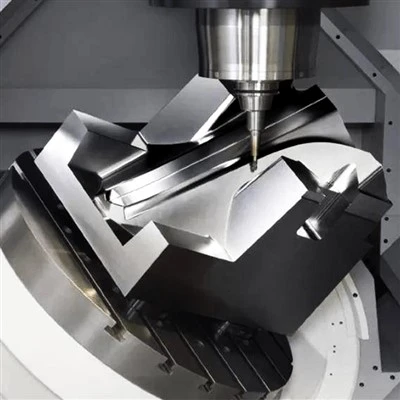
If you’re looking to source magnesium die cast parts, and you’re not sure which machine is right for your project, hit us up. We don’t just sell parts—we help you figure out the best machine and process to get exactly what you need, without overpaying for equipment you don’t need. Whether you need 100 custom medical parts or 100,000 EV components, we’ll walk you through the options, the costs, and the timeline. No jargon, no hidden fees, just real advice from people who run machines every day.
Zinc Die Casting References:
- Johnsson, M. (2018). Magnesium Die Casting: Process, Equipment, and Applications. Elsevier.
- American Foundry Society. (2020). Die Casting Handbook: Non-Ferrous Alloys and Equipment. AFS Press.
- Wang, L., et al. (2021). Semi-Solid Die Casting of Magnesium Alloys for Automotive Structural Components. Journal of Manufacturing Processes, Vol. 67, pp. 212-225.
- Dargusch, M. S., et al. (2019). Vacuum-Assisted Die Casting: Reducing Porosity in Magnesium Parts for Aerospace Applications. International Journal of Cast Metals Research, Vol. 32, No. 4, pp. 189-198.
Shenzhen Shunhaoda Technology Co., Ltd.
With abundant experience, we are one of the most professional magnesium die casting manufacturers and suppliers in China. If you’re going to buy bulk high quality magnesium die casting made in China, welcome to get free sample from our factory. Also, custom service is available.
Address: 902, Building A3, Tianrui Industrial Park, No. 35 Fuyuan 1st Road, Zhancheng Community, Fuhai Street, Bao’an District, Shenzhen
E-mail: sales@shdindustry.com
WebSite: https://www.shd-industry.com/
