Hey there! I’m an aluminum hydroxide supplier, and today I want to dig into a super interesting topic: how aluminum hydroxide affects the magnetization of magnetic materials. As someone who deals with aluminum hydroxide on a daily basis, I’ve seen firsthand how it can play a crucial role in modifying the magnetic properties of different materials. So, let’s get right into it! Aluminum Hydroxide
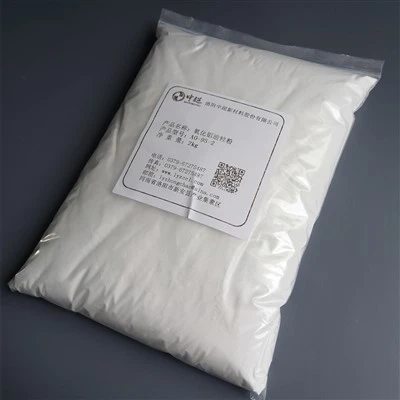
Understanding Aluminum Hydroxide and Magnetic Materials First off, let’s talk a bit about aluminum hydroxide. It’s a white, powdery substance that’s commonly used in a ton of different industries. We suppliers often sell it for uses like flame retardants, in water treatment processes, and even in some pharmaceuticals. It’s got some pretty cool chemical properties, like being amphoteric, which means it can react with both acids and bases.
Now, magnetic materials are those that can be magnetized or attracted to a magnet. There are different types, like ferromagnetic materials (think iron, nickel, and cobalt), which can form permanent magnets, and paramagnetic and diamagnetic materials, which have weaker magnetic responses.
How Aluminum Hydroxide Interacts with Magnetic Materials One of the main ways aluminum hydroxide affects magnetic materials is through its physical presence. When you mix aluminum hydroxide with a magnetic material, it can act as a kind of spacer between the magnetic particles. This is important because the magnetic properties of a material are often influenced by how the magnetic particles interact with each other.
Let’s say you have a bunch of magnetic particles clumped together. They’re gonna have a certain magnetic behavior, like a specific magnetization strength. But if you introduce aluminum hydroxide into the mix, it can separate these particles. This can change the way the magnetic fields of these particles interact. In some cases, it might reduce the magnetic coupling between the particles, which can lead to a decrease in the overall magnetization of the material.
Another way is through chemical interactions. Aluminum hydroxide can react with the surface of magnetic particles. For example, in some magnetic materials, there might be a thin layer of oxide on the surface of the particles. Aluminum hydroxide can react with this oxide layer, altering the surface properties of the magnetic particles. This change in surface properties can then affect how the particles interact with an external magnetic field, thus changing the magnetization.
The Role of Aluminum Hydroxide in Controlling Magnetization In some applications, we actually want to control the magnetization of magnetic materials. That’s where aluminum hydroxide comes in super handy. For instance, in the production of magnetic recording media, we need to have precise control over the magnetic properties. By adding the right amount of aluminum hydroxide, we can fine – tune the magnetization of the magnetic layer.
If we add too little aluminum hydroxide, it might not have a significant effect on the magnetization. But if we add too much, it could over – dilute the magnetic material and reduce the magnetization to an unacceptable level. So, it’s all about finding that sweet spot.
In the field of magnetic sensors, aluminum hydroxide can also be used to adjust the sensitivity of the sensors. By modifying the magnetization of the magnetic materials used in the sensors, we can change how they respond to external magnetic fields. This can improve the performance and accuracy of the sensors.
Case Studies and Real – World Applications I’ve worked with a few clients in the electronics industry who were using magnetic materials for some high – tech devices. They were facing issues with the magnetization of their materials not being consistent. After some experimentation, we added a small amount of our aluminum hydroxide to their magnetic material mixtures.
The result was pretty amazing. The magnetization became much more stable, and the overall performance of their devices improved. In one case, a client was making magnetic memory devices. By using our aluminum hydroxide, they were able to increase the data storage density because the controlled magnetization allowed for more precise magnetic bit recording.
Another client in the automotive industry was using magnetic materials in their sensors. They were having trouble with the sensors being too sensitive and giving false readings. After incorporating aluminum hydroxide, the sensors became more reliable because the magnetization was adjusted to the right level.
Advantages of Using Our Aluminum Hydroxide for Controlling Magnetization When you choose to use our aluminum hydroxide for modifying the magnetization of your magnetic materials, there are several advantages. First of all, our aluminum hydroxide is of high purity. This means that there are fewer impurities that could potentially interfere with the magnetic properties of your materials. A high – purity aluminum hydroxide will give you more predictable results when it comes to adjusting the magnetization.
Secondly, we offer consistent quality. Every batch of aluminum hydroxide we produce is carefully tested to ensure that it meets our strict quality standards. This consistency is crucial when you’re making products that rely on precise magnetic properties.
We also provide excellent customer support. Our team of experts is always ready to help you figure out the right amount of aluminum hydroxide to use for your specific application. Whether you’re a small – scale manufacturer or a large – scale industrial company, we can work with you to optimize your process.
How to Incorporate Aluminum Hydroxide into Your Magnetic Material Production Incorporating aluminum hydroxide into your magnetic material production process is relatively straightforward. First, you need to determine the right amount of aluminum hydroxide to add. This will depend on the type of magnetic material you’re using, its intended application, and the desired magnetization properties.
You can start by conducting some small – scale tests. Mix different amounts of aluminum hydroxide with your magnetic material and measure the magnetization changes. Once you’ve found the optimal amount, you can scale up the process.

When adding aluminum hydroxide, you can mix it with the magnetic material in a dry or wet state, depending on your manufacturing process. If you’re using a wet process, make sure the aluminum hydroxide is well – dispersed in the liquid to ensure even distribution in the magnetic material.
Conclusion So, there you have it! Aluminum hydroxide can have a significant impact on the magnetization of magnetic materials. Whether it’s through physical spacing or chemical interactions, it offers a way to control and fine – tune the magnetic properties of materials.
Aluminum Hydroxide As a reliable aluminum hydroxide supplier, I encourage you to reach out to discuss how we can help you with your magnetic material applications. We’re here to provide you with high – quality aluminum hydroxide and the support you need to optimize your production process. If you’re interested in learning more about how our aluminum hydroxide can benefit your business or have any questions about its application in magnetic materials, don’t hesitate to contact us for a procurement discussion.
References
- Cullity, B. D., & Graham, C. D. (2008). Introduction to Magnetic Materials. Wiley-IEEE.
- Wang, Y., & Xu, B. (2019). Recent Advances in Magnetic Nanomaterials for Biomedical Applications. Advanced Science, 6(12), 1802247.
Luoyang Zhongchao New Material Co., Ltd.
As one of the most professional aluminum hydroxide manufacturers and suppliers in China, we have world-leading production equipment and strong manufacturing capabilities. Please rest assured to buy high quality aluminum hydroxide made in China here from our factory. For price consultation, contact us.
Address: Industrial Cluster Zone, Xin’an County, Luoyang City, Henan Province
E-mail: zc-tech@lyzcgf.com
WebSite: https://www.zc-aths.com/
