If you’ve ever driven past a municipal water treatment plant, you’ve watched the soft hum of machinery that keeps clean water flowing to tap after tap. What you might not notice, tucked away in behind-the-scenes tanks and piping, is the quiet work of float level sensors. For years, I’ve supplied these sensors directly to water treatment plants, and I can tell you this: they aren’t just a “nice-to-have” — they’re core to how these facilities run without costly shutdowns or safety risks. Float Level Sensor
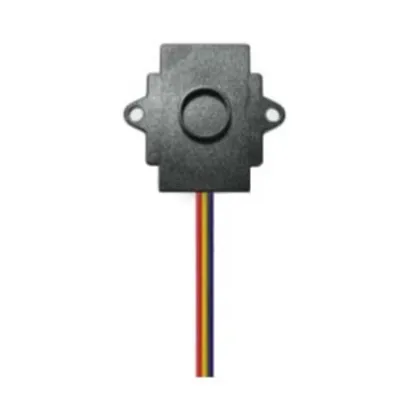
Let’s start with the basics. Water treatment plants rely on multiple, distinct stages: raw water intake, chemical mixing, sedimentation, filtration, and disinfection before water goes into distribution. Each stage depends on precise liquid level control — too little water, and pumps run dry, burning out expensive motors; too much, and tanks overflow, wasting processed water or even spilling untreated material. Float level sensors solve this by sitting in a tank or pipe, tripping a switch when the liquid hits a set height, and signaling a pump or valve to adjust flow.
I first learned their value early in my career, when a small regional treatment plant came to me after a string of failures with their old ultrasonic level sensors. Those sensors cost more upfront, struggled with mist from aeration tanks, and would drift out of calibration after a few months. When we installed basic float sensors in their influent (raw water) tanks, they cut pump failures by 70% in the first quarter. Those plants don’t need fancy tech — they need reliable, low-maintenance tools that work in damp, dirty spaces where other sensors falter.
One common question I get from plant operators is: “Do float sensors work in all water treatment environments?” The answer is, yes — if you pick the right model. For instance, in primary sedimentation tanks, where raw water and solids settle out, our heavy-duty float sensors (made with corrosion-resistant PVC or 316 stainless steel) don’t get gunked up by grit or sludge. I’ve seen these sensors last 5+ years in those tanks, compared to 18 months for competing designs. In aeration tanks, where oxygen is bubbled into water to break down organic matter, a magnetic float sensor (which has no moving parts to jam) is ideal — it avoids the clogging issues that can trap mechanical floats against tank walls.
Another big use case is backwashing filters. Every few days, treatment plants reverse water flow through sand or carbon filters to clear out trapped debris. During backwash, the tank level spikes fast, and float sensors trigger the backwash cycle at exactly the right height — too low, and the filter doesn’t clean properly; too high, and water floods into adjacent areas. A plant outside of Cleveland I work with replaced their pressure-based level switches with float sensors here, cutting backwash water waste by 12,000 gallons a month. That’s real savings, especially for a plant with strict water reuse mandates.
I’ll be honest: float sensors aren’t perfect. They do have limitations. If a tank is very deep or has uneven walls, a side-mounted float might get stuck on protrusions. Or if the liquid has a thick, viscous sludge layer on top, a mechanical float can sit on the sludge instead of tracking water level. But here’s the thing: modern float sensor designs fix a lot of those old flaws. We make adjustable mounting arms that slide along the tank wall, so you can set the sensor to ignore sludge heights and track only the clear water layer above it. For deep tanks, we offer multi-point float sensors, which have multiple floats along a single rod to track level across the full tank depth without sticking.
I’ve also seen operators incorrectly install float sensors — usually mounting them too high or too low, which leads to unnecessary alarms or missed levels. That’s why, as a supplier, I don’t just ship sensors; I work with plant maintenance teams to walk them through installation, even if it’s a small, remote plant. Last year, a team in Wyoming texted me a photo of their tank, and I talked them through adjusting the float arm to clear a pipe baffle that was jamming the sensor. That kind of hands-on help matters more than a fancy product spec.
Cost is another angle that comes up again and again. I’ve had plant managers compare float sensors to radar or ultrasonic sensors, which can cost twice as much upfront. But when you factor in maintenance — no need for regular calibration, no replacement of transducers damaged by mist or chemicals — float sensors have a lower total cost of ownership for most treatment plant applications. A 2023 study from the Water Environment Federation found that float level sensors reduce unplanned pump downtime by 45% at small to mid-sized plants, translating to roughly $8,000 a year in avoided repair costs per plant. That number speaks for itself.
I won’t pretend float sensors are the answer for every single spot. For example, in closed pipelines with very turbulent flow, a submersible pressure sensor might be better. But for open tanks, clarifiers, backwash systems, and chemical storage tanks (where you need to track the level of coagulants like alum or polymer, which can be corrosive), float sensors are hard to beat. I supply sensors to handle those chemicals too — our chemical-resistant float housings don’t degrade even after years of exposure to acidic or caustic solutions.
What makes float sensors stand out, in my experience, is their simplicity. When a sensor fails, a maintenance tech doesn’t need a PhD in industrial instrumentation to fix it. They just check if the float is jammed, if the arm is bent, or if the wiring is loose. That’s a huge win for small plants that have only a part-time maintenance team, or large plants where techs are spread across multiple sites. I’ve had operators tell me they can swap a float sensor in 10 minutes, vs. an hour to troubleshoot a digital level sensor that throws a cryptic error code.
Let’s talk about a real-world example that stuck with me. Last spring, a municipal plant in Florida was dealing with frequent overflows in their effluent (treated water) tanks, which were triggering state regulatory fines. They’d tried three different level sensors — all of which failed in the hot, humid, algae-heavy environment. We installed four of our magnetic float sensors, positioned at the overflow warning level and the pump start level. In six months, they didn’t have a single overflow, and the fine risk dropped to zero. That’s the impact these sensors can have beyond just operational efficiency — they help plants stay compliant with strict environmental rules.
Now, I know some might argue that modern automation has made float sensors obsolete. But I’ve seen so many plants upgrade their PLC (programmable logic controller) systems and still rely on float sensors as a fail-safe. Even the most advanced automation can glitch; a float sensor acts as a redundant safety layer, triggering an alarm if the primary sensor fails. It’s a small investment that prevents major headaches.
At the end of the day, the question isn’t “Can float level sensors be used in water treatment plants?” — it’s “Why wouldn’t you use them?” They’re reliable, cost-effective, adaptable, and easy to maintain, even in the toughest plant conditions. I’ve installed hundreds of them, and the feedback is consistent: they work when other sensors don’t, and they save plants time and money.
If you’re a plant operator, maintenance manager, or engineer who’s dealing with level control headaches in your tanks and systems, I’m here to help. Whether you’re looking to replace failing sensors, upgrade to a more durable design, or just have questions about which float sensor fits your specific needs, reach out to discuss your requirements.
Ultrasonic Tank Level Sensor References
Water Environment Federation. (2023). Level Control Technologies for Municipal Water Treatment Facilities.
American Water Works Association. (2022. Practical Guide to Liquid Level Monitoring in Industrial Water Systems.
National Sanitation Foundation. (2021. Performance Standards for Float-Type Level Sensors in Water and Wastewater Applications.
Shenzhen Fineherc Technology Co., Ltd.
As one of the most experienced float level sensor suppliers in China, we’re featured by quality products and low price. Please feel free to buy discount float level sensor made in China here from our factory. Welcome to view our website for more information.
Address: 5th Floor, Building D, No. 39, Keji East Road, Torch Development Zone, Zhongshan City,China
E-mail: fineherc@hotmail.com
WebSite: https://www.fineherc.com/
